African Union Adopts Coffee As A Strategic Crop For The Continent

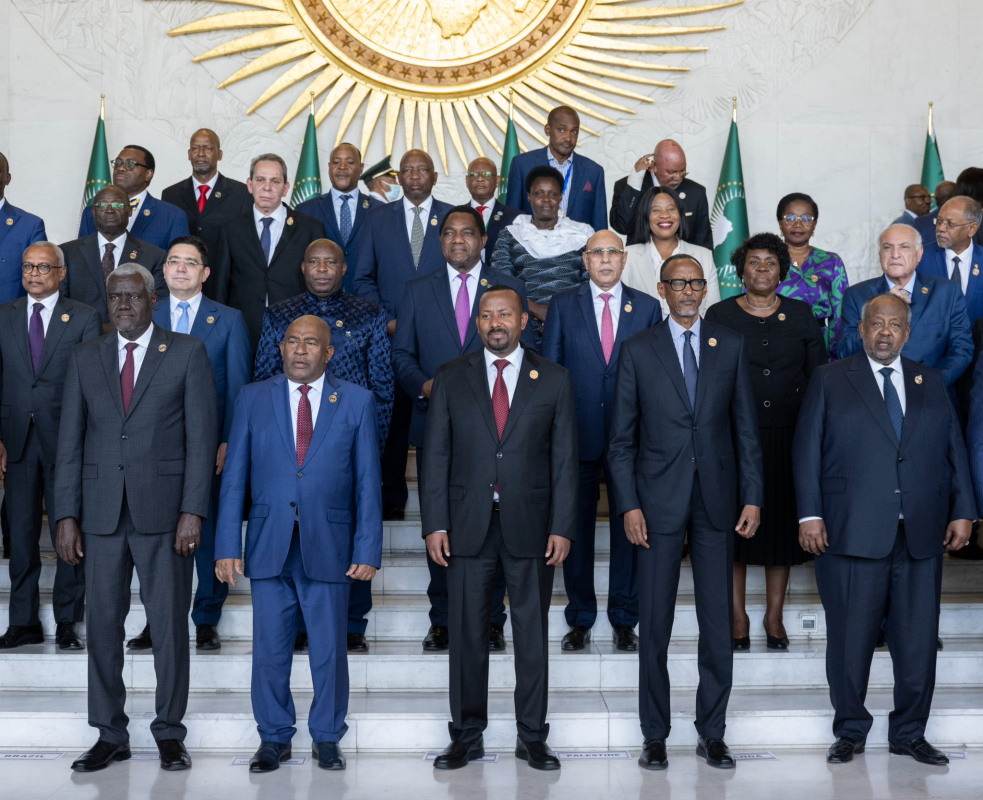
The African Union (AU) heads of state Assembly has endorsed the G25 Kampala Declaration on coffee, making coffee a strategic crop for the continent.

The heads of state made coffee a strategic commodity for the continent on February 19, 2024 during the 37th AU Summit held in Addis Ababa, Ethiopia.

The Kampala declaration on coffee that was endorsed by heads of state came out of the G-25 Coffee Summit held in August last year in Kampala that asked the AU to make coffee a strategic commodity under the AU agenda 2063.

The Ugandan delegation in Ethiopia was led by Vice President Jessica Alupo, Minister for Agriculture, Frank Tumwebaze and Minister of Foreign Affairs, Jeje Odongo.

Tumwebaze says the AU  Assembly also resolved that  the next  extra ordinary AU Summit to consider the post-Malabo CAADP framework will be held in Kampala, Uganda in January 2025. Uganda currently chairs the special technical committee on Agriculture, rural development and water ( blue economy).

It should be noted that during the second meeting of the G-25 African Coffee Summit held in Kampala in August last year, leaders from coffee-producing countries in Africa agreed to push the value addition agenda and halt the export of raw coffee beans. This initiative is aimed at elevating the income of farmers and curtailing the exploitation perpetuated by Western nations.

All participants at the summit, unanimously emphasized that for Africa to capitalize on the lucrative coffee industry, the continent’s producing nations must assume control and dominance within the market.

While opening the summit, President Yoweri Museveni presented statistics demonstrating that even though Africa contributes a significant portion of coffee to the global market, the producing countries reaped the least benefits from the coffee economy.

Museveni added that all is not lost as the situation can be reversed by emphasizing the imperative for coffee-producing nations to enhance the value of their crop. He contended that this approach will not solely amplify revenue derived from the coffee industry but will also engender increased local employment opportunities, thereby mitigating the escalating unemployment rates.

The President underscored the viability of prohibiting the export of raw coffee and rectifying the inequitable international market dynamics. He told to the delegates that Uganda has already taken steps in this direction by imposing export bans on various raw materials, including valuable minerals such as uranium, copper, wolfram, and iron ore, along with currently sought-after resources like lithium.

Source: www.businessfocus.co.ug 

Feature on slide

Agriculture State Minister applauds UCDA for developments in sub sector

The Minister of State for Agriculture, Hon. Fred Bwino Kyakulaga has applauded the Uganda Coffee Development Authority (UCDA) for the positive developments in the coffee sub sector. The Minister was meeting UCDA’s management team at Coffee House as part of his orientation in his new posting.

“I am excited because I just learned that 85% of export earnings come from Agriculture. Out of that, coffee is the biggest contributor,” Hon. Kyakulaga said. “[Because of that] a trend of decline in the coffee sector [in the 1990s] has been reversed.”

The Minister commended the UCDA management for their efforts in boosting coffee exports and foreign exchange for the country.

“I have been following in the local press,” Hon. Kyakulaga said. “The story is very exciting and pleasing about the increase in the exports and the revenues the country is getting. The developments in the sector are a great achievement. I am excited to join the team.”

Dr. Emmanuel Iyamulemye, the Managing Director of UCDA, while welcoming the Minister, informed him that the agency was the first to be established in the Ministry of Agriculture, Animal Industry and Fisheries.

“We have made the Ministry proud with our performance to date and we are very committed to continue doing so,” Dr. Iyamulemye pledged. “We will not disappoint you. We are happy to provide information and continue to support the Ministry.”

In his presentation, Dr. Iyamulemye outlined UCDA’s mandate, key achievements and challenges and plans to meet its strategic goals. Dr. Iyamulemye revealed that coffee accounts for about 13-15% of total export earnings and is the 2nd highest foreign exchange earner for the country. In addition, Uganda is the 2nd largest coffee producer in Africa and the largest exporter on the continent. Current coffee production stands at 8 million 60kg bags while exports stand at 6.08 million 60kg bags for the year ended 2020/21.

In his closing remarks, Hon. Kyakulaga acknowledged coffee is one of the biggest earners of foreign exchange yet its budget is not commensurate with its requirements for even better performance.

“We shall get back on the table and harmonise this. We shall advocate for correcting that picture. We must feed our cash cow well. If we don’t do that, how do we expect to achieve the targets of the Coffee Roadmap?” Hon. Kyakulaga asked rhetorically. UCDA’s aims to produce 20 million 60kg bags of coffee by 2025.

The Minister expressed his commitment to work with UCDA to address the challenges that the sub sector currently faces and to take the coffee sub sector to the next level.

Feature on slide

Uganda’s Coffee exports in June 2021 amounted to 618,388 60-kilo bags worth US$ 58.56 million, the highest ever in a single month since 1991.

Uganda’s Coffee exports in June 2021 amounted to 618,388 60-kilo bags worth US$ 58.56 million, the highest ever in a single month since 1991.

The UCDA monthly report for June 2021 shows that this comprised 565,449 bags of Robusta valued at US $ 50.25 million and 52,939 bags of Arabica valued at US$ 8.31 million.

This was an increase of 47.04% and 46.63 % in quantity and value respectively compared to the same month last year.

By comparing quantity of coffee exported by type in the same month of last Coffee Year (June 2020), Robusta increased by 63.89% and 72.56% in quantity and value respectively, while Arabica exports decreased in both quantity and value by 29.93% and 23.16% respectively.

Increasing Robusta exports during the month compared to the previous year were due to newly planted coffee which started yielding supported by favourable weather. This was also compounded by a positive trend in global coffee prices in the last two weeks of the month which prompted exporters to release their stocks on top of increased procurement.

The decrease in value of Arabica coffee was due to low volumes exported.

Arabica monthly exports continued to reduce compared to the previous year attributed to the off-year biennial cycle characteristic of Arabica production,” UCDA report reveals.

Coffee exports for the 12 months (Financial year 2020/21) amounted to 6,078,638 60-kilo bags worth US$ 559.26 million compared to 5,105,881-kilo bags valued at US$ 496.28 million the previous year (Financial Year 2019/20).

This represents 19.05% and 12.69% increase in both quantity and value respectively. The total quantity of exports in 12 months was the highest in 30 years.

Exports by Type and Grade

The average export price was US$ 1.58 per kilo, 1 cent lower than US$ 1.59 per kilo realized in May 2021. Robusta exports accounted for 91.44% of total exports higher than 86.91% in May 2021.

The average Robusta price was US$ 1.48 per kilo, 2 cents higher than the previous month. Organic Screen 18 and Organic Screen 15 fetched the highest price of US$ 2.23 per kilo, a premium of 65 and 70 cents over conventional Screen 18 and Screen 15 respectively.

It was followed by Washed Robusta sold at an average price of US$ 1.96 per kilo. The share of Sustainable/washed coffee to total Robusta exports was only 0.46%.

Arabica fetched an average price of US$ 2.62 per kilo, 14 cents higher than in May 2021. The highest price was Mt. Sustainable Arabica Fully Washed Sipi Falls sold at US$ 5.37 per kilo, a premium of 204 cents over conventional Bugisu AA sold at US$ 3.03 per kilo. This was followed by Mt. Elgon PB sold at US$ 4.41 per kilo as a sample. Drugar was sold at US$ 2.64 per kilo, a discount of 69 cents from Bugisu AA. Organic Drugar was sold at US$ 3.88 per kilo, a premium of US $ 1.24 over conventional Drugar. The share of sustainable Arabica exports to total Arabica exports was 3.7%. Drugar exports had a 65% of Arabica exports compared to 56% the previous month.

Coffee Exports By Destination

Italy maintained the highest market share with 34.57% compared with 37.02% last month. It was followed by Germany 13.11% (14.36%), India 9.52% (5.00%) Sudan 7.81% (4.04%) and Algeria 6.28% (5.80%). It’s important to note that the figures in brackets represent percentage market share held in May 2021.

Coffee exports to Africa amounted to 112,416 bags, a market share of 18% compared to 69,349 bags (14%) the previous month. Leading African countries included Sudan, Morocco, Kenya, Algeria, Egypt, Ethiopia and South Africa. Europe remained the main destination for Uganda’s coffees with 61% imports share.

Global Situation

World coffee exports amounted to 9.79 million bags in June 2021 compared to 10.89 million in May 2020. Exports for the first 8 months of coffee year 2020/21 (October 2020-May 2021) increased by 2.2% to 87.3 million bags from 85.38 million bags the previous period (October 2019-May 2020).

The ICO Composite Indicator price increased by 4.6% to 141.03 US compared to 134.78 US cents in May 2021.

The prices have seen a positive trend since October due to an expected reduction in supply in key producing countries.

Global coffee production for 2020/21 is estimated to increase by 0.3% to 169.5 million bags while the consumption is estimated to increase by 1.9% to 167.24 million bags.

Local Situation

During the month of June 2021, farm gate prices ranged from Sh.2,000-2,500/= per kilo of Kiboko (Robusta dry cherries); Shs. 4,200-4,500/= for FAQ; Sh. 6,500-6,800/= for Arabica parchment; and Sh. 5,500-6,000/= per kilo for Drugar from Kasese. Robusta Kiboko averaged UGX 2,250/= per kilo; FAQ UGX 4,350/= per kilo, Arabica parchment UGX 6,650/= per kilo and Drugar UGX 5,750/= per kilo.

Outlook for July 2021

Coffee exports are projected to be 650,000 bags as the main harvesting period in Greater Masaka and South Western regions reaches its peak during the month. Dry weather coupled with some rains will speed up ripening and procurement of the coffee from the countryside.

Increased exports are also likely to be driven by increasing global coffee prices exhibited in the last two weeks of the previous month on account of reduced harvest from Brazil and Vietnam which will stimulate exporters to also release their stocks.

Feature on slide

Uganda Readies Self To Cash-in on China’s Booming Coffee Market

Uganda, like many African countries, suffers from an enormous trade deficit with China. Last year, according to UN figures, Uganda exported just $40 million worth of goods to China but imported more than $1.3 billion in return.

The government is taking measures to address the problem by leveraging one of its most valuable exports - coffee.

In a recent interview with The China Africa Project, Dr. Emmanuel Iyamulemye, the Managing Director at Uganda Coffee Development Authority (UCDA), revealed that “Uganda is coming to China in a big way.”

He revealed that Uganda’s coffee first arrived in China in 2003 through a joint venture with a Chinese company.

“We have learnt lessons over the years; we have just completed a coffee promotions strategy for China. We are looking at how Ugandan coffee can penetrate in China,” Iyamulemye says.

He adds that Uganda’s coffee roadmap of increasing coffee production from 3.5m bags to 20m bags by 2030 has been informed by lessons worldwide in terms of the market.

“For China, we are looking at a structured demand so that we offset the imports deficit by exports,” Iyamulemye reveals, adding: “With bi-lateral agreements, we believe this can happen. This is happening with Tanzania where they are growing cassava to supply starch to Chinese industries.”

Asked how UCDA intends to promote Ugandan coffee without spending much, Iyamulemye said they are looking at online platforms since youth can access internet. Therefore, online advertisement will be key.

He adds that Uganda’s focus is on high quality specialty and fine coffees.

“Our current strategy is threefold; specialty coffee-high end coffees- that means very high-quality premium coffees. That’s on one hand. We have another segment of commercial coffees for the average consumer…We are also looking at roasted and ground coffee which is our main focus so that we benefit the farmer who is producing the coffee,” Iyamulemye says, adding: “If we can have cooperatives or farmer groups which are exporting roasted and ground coffee, it will be very good because money will be coming directly in farmers’ pockets.”

He notes that UCDA is looking at ways of supporting the private sector to penetrate the Chinese market which will give the farmer a good place in the global trade.

“Ugandan coffee is now ranked 3rd globally in terms of quality. We have big volumes so we can consistently supply the Chinese market (unlike some African countries),” he says.

“Even if we are exporting green beans, it should attract a premium price,” he says.

Applying Best Practices

On applying best agronomic practices, Iyamulemye says there’s a national coffee platform where coffee stakeholders share practices and lessons monthly.

“Because of climate change, we have realized shade grown coffee has a particular unique taste. It is also a mitigation to climate change,” he says.

Traditionally, coffee has been intercropped with banana plantain.

“Robusta is grown as forest crop. We are looking at shade trees to intercrop with coffee which comes with unique taste and aroma. We are also looking at productivity per tree, thus stumping, good and post-harvest practices are key. This is increasing production and quality of coffee,” he says.

With the new coffee law which will come into force soon, Iyamulemye says UCDA shall be facilitating farmers, buyers and exporters to increase production and exports whilst applying best practices.  

“We shall be registering farmers for traceability purposes. We also look at certification of organic coffee growers. We want to have Ugandan coffee differentiated as unique in terms of quality and consistency,” he says.

On capturing the China coffee market, the UCDA boss says they are discussing with China to have preferential treatment such as export quotas. “Our coffee shall be in high end coffee markets in China,” he emphasizes.

Farmer & Exporter Speaks Out

Frandan Tumukunde, a farmer and coffee marketing expert with extensive experience in China says the biggest challenge for Ugandan farmers is financing and as such, they are exploited by middlemen who buy coffee cheaply and sell it at exorbitant prices.

“If farmers are financed well, this will be overcome,” Tumukunde, who owns a Ugandan coffee brand that sells Ugandan coffee across Asia, says.

Tumukunde says he is happy that farming practices are improving.

“Uganda is the birth place of Robusta coffee and therefore Ugandan coffee is unique from other African coffees,” he says in reference to Uganda’s comparative advantage.

“Uganda is well placed according to the topography and high altitude because of the Equator; thus, we are producing good quality coffee,” he adds.

He says China has about 500m middle class people which Uganda can take advantage of.

“China is the youngest coffee market. Chinese have been drinking teas but are now shifting to drinking coffee,” he says.

He urges Ugandans especially the youth to grow more coffee and employ the best agronomic practices.

“Youth should take on coffee farming because the market is huge…China-Africa cooperation is good. If they can extend finance to the farmers, it will be good and kick out middlemen,” he says.

Increasing coffee exports to China

Uganda is looking to China to help quintuple the volume of coffee exports over the next five years. While that may sound ambitious, it may actually be achievable thanks to the surging demand for coffee in China’s largest and wealthiest cities.

China’s coffee market is estimated at US$11.5bn in annual sales and is expected to grow by 10% in the next five years.

Additionally, Coffee consumption in China is growing at between 15%-20% annually.  China is also Starbucks’ second largest market after the US.

Starbucks operates 4200 stores in China and plans to open up more 1800 stores in the next two years. 

Analysts say most of this growth is happening in tier one cities but inland cities (tier two/three cities) are yet to embrace coffee drinking.

Traditionally, Chinese have been drinking teas, but they are shifting to coffee given its aroma and unique taste.

To highlight how huge Chinese market is, in May this year, the Chinese bought 1.5 tonnes of Rwandan coffee beans within a minute in online auction.

With the increasing volumes of organically grown coffee, Uganda has an advantage over other African countries to capture the China coffee market.

Coffee is by far Uganda’s most important export as it generates 20%-30% of the country’s foreign exchange earnings.

According to Uganda Coffee Development Authority (UCDA) Coffee Roadmap, Uganda aims to produce 20m 60kg bags of coffee by 2030. This means that Uganda must look for market for the increasing coffee volumes. The China market is the new frontier. 

Feature on slide