Swiss International Holiday Expo 2025 in Switzerland

The national coffee act, 2021
Minister

Message from the Minister 

On the Performance and Future of Uganda’s Coffee Subsector

It is with great pride and optimism that I address all stakeholders in Uganda’s coffee value chain following a historic performance in the Financial Year 2023/24. Uganda’s coffee subsector has reached a pivotal milestone, earning a record-breaking USD 1.14 billion in export revenue.......

Hon. Frank Tumwebaze,

Minister of Agriculture, Animal Industry and Fisheries

read more

Agriculture State Minister Commends Uganda Team At Expo 2020 Dubai

Hon. Fred Kyakulaga Bwino, the Minister of State for Agriculture, Ministry of Agriculture, Animal Industry and Fisheries has urged Uganda’s representatives at Expo 2020 in Dubai to pursue the leads generated to the end to ensure the country benefits from the experience of participating in the six-month long event.

The Minister was in Dubai to attend the Agricultural Thematic Week at Expo 2020. He appreciated the stakeholders present and commended them highly for representing Uganda in their different capacities and urged them to pick lessons they can use to transform their respective sectors back home.

“We should not just come to the Expo, stay for six months and go back [with nothing to show for it],” he told stakeholders at the Uganda pavilion. “We should at our various levels seriously think how much we can emulate this and benefit from it; how much was invested and how much has been recovered.”

Expo 2020 began on 1st October 2021 and will run till 31st March 2022.

According to Dr. Sam Omara, the Deputy Commissioner General of the Uganda pavilion, the country has exceeded its target of attracting Foreign Direct Investment (FDI) worth 4 billion shillings to Uganda by the end of the expo.

“The target of our participation at Expo 2020 was to attract FDI worth 4 billion shillings to Uganda by the end of the 6 months but as I speak now we have so far surpassed that by over 500 million shillings,” Dr. Omara said.

He revealed that there are several projects still underway and the figure is likely to go higher.

The most sought after agricultural products according to the pavilion director, Mr. J. B. Lwere, are coffee, tea, fruits and vegetables, among others. The exposure Uganda coffee has received at Expo 2020 is expected to increase exports to the region with several expressions of interest being received at the pavilion daily.

Coffee exports to the Middle East have been on the rise. In FY 2020/21, Uganda exported 127,519 60 kg bags of coffee compared to 82,249 bags the previous year.

According to Uganda Coffee Development Authority’s representative at the pavilion, Ms. Judith Engena, visitors appreciate Uganda’s coffee and have given it positive reviews. Engena said they have received several expressions of interest in both Arabica and Robusta coffee which they believe will translate into actual sales.

The Minister encouraged all present to work together to raise the country’s flag and move the nation forward and urged the stakeholders to ensure consistency in quality, quantity and volume of their products.

“The [export] opportunities are immense; we simply cannot exhaust the demand. The issues are well articulated regarding consistency in value and on volumes,” the Minister stated before adding, “The key driver in this is the Government. We will come up with a way to handle the entire value chain and segment the various markets.”

Picking up on issues raised in the meeting regarding quality and product packaging, Onzimai of PSFU informed the meeting that his organisation can provide solutions if they have the necessary information on what is required. He suggested that a team made up of representatives from the different stakeholders be commissioned to solve non-capital expenditure (non-CAPEX) issues.

“We have latitude to address non-CAPEX issues such as designing packaging, for companies to get certifications to access the markets, bringing products to the markets and building market linkages,” Onzimai said.

Also present at the meeting were Ambassador Elly Kamahungye Kafeero and Brain Mwanika from the Ministry of Foreign Affairs, Daniel Onzimai, an investment specialist from Private Sector Foundation Uganda, Lawrence Oketcho the director trade information at Uganda Export Promotions Board, private sector players and a team from Uganda Coffee Development Authority.

Feature on slide

UCDA launches campaign to stump old coffee trees and distribute fertilizers to coffee farmers countrywide

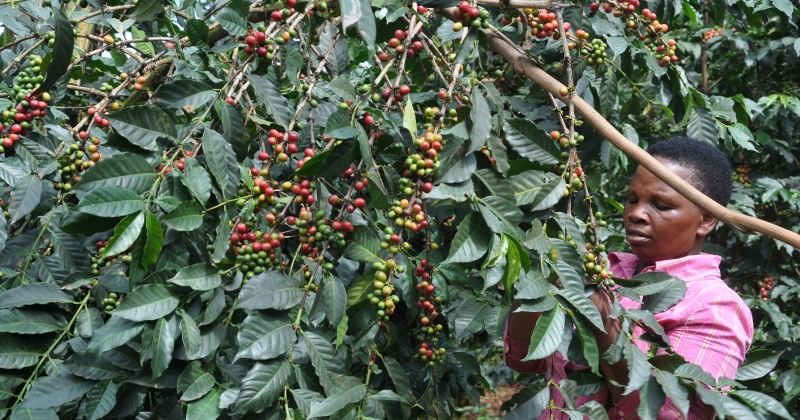
Uganda Coffee Development Authority (UCDA) has launched a campaign to stump old coffee trees and rehabilitate abandoned coffee gardens across the country to help increase productivity. 

Under the campaign, UCDA will train farmers on good agricultural practices (GAPS) such as stumping overgrown coffee trees to increase their yield. The Authority will also distribute fertilizers to coffee farmers who comply. 

The campaign titled “Renovate and Rehabilitate your Coffee; Every Tree Counts” was launched on December 10, 2020, at the annual coffee show held at the Kichwamba sub-county headquarters in Rubirizi district. 

The coffee show was organised by Café Africa, aBi Development and UCDA together with Rubirizi District local government. It brought together coffee farmers from western Uganda to learn, share experiences, and collectively find solutions affecting coffee farmers in the region. Unlike the coffee shows held in the past, this one was low key as the organisers endeavoured to adhere to the guidelines for managing the COVID-19 pandemic.

UCDA set up a demonstration plot of 100 Arabica coffee trees where good agricultural practices were demonstrated to participants. The practices included the correct spacing for Arabica and Robusta coffee, how to dig a hole to plant the seedling in, manure application, shade provision, watering, bending a coffee tree to increase productivity, mulching, soil and water conservation, pest and disease identification and control, weed management, fertilizer application, stumping and harvesting.

“After the training, the farmers realised that tall, old coffee trees cannot yield much, and they even make it difficult to carry out some activities such as picking, spraying and pest identification,” Emily Asiimwe, UCDA Regional Coffee Extension Officer said.

“We have trained the farmers on how to stump their coffee trees. This is in line with the campaign we have launched which calls on farmers to renovate and rehabilitate their coffee because every tree counts," she added. 

For the past couple of years, coffee farmers across the country have complained of low soil fertility levels which affect the amount of coffee they harvest every season.

To address this concern, UCDA developed a programme to support coffee farmers with fertilizers. The programme is in line with the fourth initiative of the Coffee Roadmap. The initiative aims to strengthen farmer organisations and producer cooperatives. By distributing fertilizers in the nationwide programme, UCDA aims to support farmers to increase productivity.

Last financial year, UCDA imported 100,000 bags of 25kg each of Fertiplus, an organic fertilizer, and conducted a pilot study before rolling out the national programme to coffee farmers organized in cooperatives or farmer organisations across the country.

During the show, farmers also called on UCDA to support them with pesticides and fungicides to use in the control of coffee pests and diseases most especially black coffee twig borer (BCTB), root mealy bugs, scales, coffee wilt disease (CWD), coffee red blister, and coffee leaf rust which continue to lower both quality and quantity of coffee produced in this sub-region.

In response, Asiimwe told the farmers that UCDA will soon support them with pesticides and fungicides to help fight pests and diseases.

Uganda ranked 3rd country with best coffee globally

Uganda coffee was ranked 3rd best in the world behind Ethiopia and Kenya by professional coffee tasters in a survey of the top 16 coffee-growing countries in the world.

The coffee tasters graded 1,229 coffees from around the world that was harvested from 2010 to 2018 with the top three spots going to African countries.

The professional coffee tasters are certified by the Coffee Quality Institute (CQI), a non-profit organization that works internationally to improve the quality of coffee and the lives of the people who produce it.

The CQI certified coffee graders must pass 22 tests to prove they can grade coffee accurately and consistently by its aroma, flavour, acidity, body, balance and more.

A grading scale with a maximum score of 100 was used to score coffees from each of the 16 countries.

Ethiopia scored the highest average rating with 84.88, followed by Kenya with an average rating of 84.31 and Uganda came third with an average rating of 84.05.

Out of the Uganda coffees that were tested, Arabica coffee owned by Kabum Trading Company in Kapchwora, Eastern Uganda came top with a score of 86.83.

Dr. Emmanuel Iyamulemye, the Managing Director, Uganda Coffee Development Authority said that Uganda’s coffee has been improving over the years and stakeholders need to more so that Uganda attains the number one position.  

“The quality of Ugandan coffee has been improving over the years following massive sensitization conducted by UCDA among coffee farmers and if everyone in the coffee value chain does it right, we can attain no.1 position in the world.” 

Uganda’s Coffee Sector

Coffee is the second largest valued commodity in international trade and most widely traded tropical agricultural commodity after petroleum. In the East African Community, Uganda remains the lead exporter of coffee, closely followed by Kenya and Tanzania.

Coffee exports for 12 months to October 2020, totaled to 5,409,054 bags worth $513.99m compared to 4,465,534 bags worth $435.81m the previous year. This represents a 20% and 18% increase in both quantity and value. The improved performance was attributed to an increase in production on the account of fruitation of newly planted coffee trees and favourable weather.

Under the Coffee Road Map, the Government aims at accelerating coffee exports to 20 million bags per year.

Uganda Coffee monthly exports soar past 500,000 bags

Uganda registered an in-crease in monthly coffee exports in the months of July, August and September surpassing the 500,000 bags mark. The increase is the highest since 1991.

In July, Uganda saw the highest increase in coffee exports since the liberalisation of Uganda’s coffee industry in 1991.

A total of 543,251 60 kg bags of coffee valued at US$ 49.78 mil-lion were exported in July 2020. In August, Uganda exported a total of 519,683 60 kg bags of coffee valued at US$ 46.06 million. A total of 506,470 60 kg bags of coffee valued at US$ 44.64 million were exported in September 2020.

The increase in export volumes is a direct result of deliberate efforts undertaken by UCDA to increase coffee production in the country.

In 2014, UCDA embarked on a countrywide drive to replant coffee in the country in order to revive coffee production that had stagnated at 3.5 million bags. UCDA worked with several stakeholders including the National Coffee Research Institute (NaCO-RI) to multiply coffee seedlings and Operation Wealth Creation to distribute free seedlings to farmers across the country.

In 2017, coffee exports jumped from 3.5 million bags to 4.7 million bags and the growth trend has continued. Coffee exports for the coffee year (October 2019 to September 2020) totalled to 5,360,859 bags worth US512.23 million compared to 4,439,808 bags worth US$ 433.95 million the previous year. This represents 21% and 18% increase in quantity and value respectively. If the trajectory continues, Uganda will meet the 20M target set out in the coffee road map.

Q&A: UCDA MD Reveals How The Authority Intends To Make Uganda Coffee More Competitive, Profitable

n an exclusive Q&A interview, Dr. Emmanuel  Iyamulemye, the Managing Director of Uganda Coffee Development Authority (UCDA) responded to a wide range of issues concerning the coffee sub-sector and revealed plans to make Uganda coffee more competitive and profitable.

Q: UCDA has registered several achievements over the last five years under your leadership. What would you say are the major achievements for the coffee sub sector in this period?

A: As you have said, the Authority under my leadership has achieved a lot in the last five years. I must say it has been a team effort.

When I joined UCDA in 2016, there was a target of increasing coffee production to 20 million 60kg bags by 2025. I can report that we have seen coffee production increase from 4.2 million 60kg bags in FY 2015/16 to 8.06 million bags in FY 2020/21 while coffee exports have increased from 3.6 million 60kg bags in FY 2015/16 to 6.1 million 60kg bags in FY 2020/21. That’s no mean achievement for the industry. The coffee production and export figures recorded in FY 2020/21 were the highest ever. This is mainly attributed to the planting of new coffee trees. Cumulatively, 1.167bn coffee seedlings were generated and distributed between FY 2015/16 and FY 2020/21.

I thank the President for consistently encouraging people to plant coffee to improve household incomes.  

To ensure that only quality coffee is produced, UCDA continuously sensitizes nursery operators. We developed for them training manuals on how to produce quality seedlings and this has greatly increased coffee production countrywide. Our target is to have at least one certified nursery operator in every sub-county to make seedlings more easily available to farmers.

UCDA is working with National Coffee Research Institute (NaCORI) to develop high-yielding and wilt-resistant coffee varieties.

To date, 10 varieties (KR1-10) have been developed and more are in the pipeline. We now have new Arabica varieties as well that are drought tolerant and high yielding.

Over the past five years, We have been sensitizing the public on the profitability of coffee as a business. For example, with a one hectare farm (approximately 2.5 acres of coffee), one can make a minimum of Shs20m annually which would change the fortunes of a household.

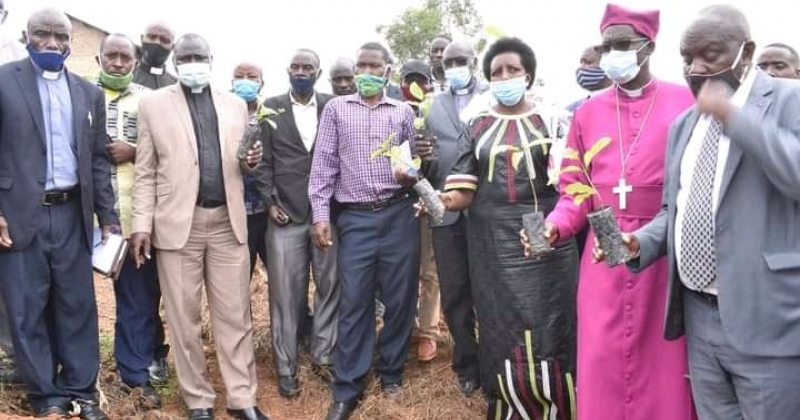
We have also established strategic partnerships with cultural institutions, religious institutions, district local governments, Uganda Development Bank and Uganda Prisons Services. We also revamped the International Women’s Coffee Alliance – Uganda Chapter to get more women in coffee because they are key in households.

With regards to sustainable coffee production, we have built capacity among the youth to trade brew and roast coffee.

We are now running a campaign on the rehabilitation of old coffee trees to increase production and productivity. To encourage farmers to stump their coffee trees, we have given them fertilizers but this is a one-off intervention to demonstrate how stumped coffee trees can be productive.

We have also promoted Uganda coffee in new markets. For example, we set up a coffee promotion office in Guangzhou, China in 2016 and since that time we have developed a coffee promotion strategy specifically for China. This is important for us because coffee consumption in China is growing at 15% annually compared to the global average of 2.5%. In addition, we partnered with the British High Commission to help Uganda Coffee enter the UK market. We have partnerships with Uganda’s foreign missions with commercial attachés. We want to maintain our key markets specifically Italy, Germany and Spain but we also want to go beyond.  We want to embark on aggressive marketing. We have partnered with the Coffee Quality Institute (CQI) of the United States to develop the various profiles of coffee from different parts of Uganda because each region has its own unique taste.

The National Coffee Act 2021 is a landmark achievement for us. When UCDA was established in 1991, our mandate was on quality at pre-export but the new law allows us to regulate and promote quality of all on-farm and off-farm activities along the coffee value chain.

Q: The National Coffee Act has been hailed as a game changer. What are UCDA’s focus areas in as far as implementation of the law is concerned?

A: This Act gives UCDA powers to regulate all on-farm and off-farm activities in the coffee value chain.

The Act repealed the UCDA Act, Cap. 325, which was enacted in 1991 and only covered off-farm activities of marketing and processing, leaving on-farm activities like planting materials, nurseries, harvesting and post-harvest handling outside the scope of the law. We are right now focusing on sensitization of coffee stakeholders about this new law ahead of registration of farmers because once we have a farmer’s register, we shall have a traceability system that will make it easy to link farmers to the markets. It will also be easy for us to disseminate information to them. It also helps us in our planning; to know the number of old coffee trees and the pests and diseases that are prevalent in various areas.

We started by recruiting Parish Coffee Development Advisors. We are identifying lead farmers in parishes who will help in the registration of farmers once we have a platform that will capture all key variables about farmers.

Farmer organizations are also a key focus area for us. We have an MOU with Uganda Cooperative Alliance to professionalize cooperatives and farmer organizations. Picking from the Coffee Roadmap, our target is to grow coffee farmers in cooperatives from about 25% to 85%.  We want to understand the needs of the existing farmer organisations and support smallholder farmers to get organized.

Q: What should coffee stakeholders (nursery operators, farmers, traders, exporters, café owners, processors, factory owners, roasters) expect from the Authority in the next five years?

A: We are focusing on agro-processing. With support from Government, we want to have a soluble plant in the next five years through a public-private partnership. We are working with Uganda Development Corporation to ensure that this is achieved. This will increase value addition to our coffee.

It would also be good if we established a packaging plant in Uganda because most of the packaging materials come from China and Kenya. The plant may not be exclusive to coffee but can serve other industries.

We are also positioning ourselves as producers of specialty and fine coffees. With high-quality/premium coffee, our coffee will market itself and fetch higher prices.

Q: There are concerns that farmers aren’t benefiting much from the increasing coffee exports. There are arguments that middlemen and largely foreign-owned companies are the ones benefiting at the expense of farmers. What are your thoughts about these concerns? How best can farmers get better prices?

A: Incidentally, there are many countries coming to benchmark on Uganda. The money that goes to the farmer is about 75% of the export price. The rest is divided among the middleman, the transporter and the exporter. However, we shouldn’t be celebrating about that price of green coffee. Our focus should be to have a big chunk of coffee exported as roast and ground coffee. That’s where the money is.

Q: What else is UCDA doing to promote coffee value addition across the coffee value chain?

A: Value addition is broad. Even quality is value addition; if you harvest ripe cherries and dry it well on tarpaulins or raised trellis, you are adding value to your coffee. The price you’ll get will be higher. We want more farmers selling Fair Average Quality coffee (kase) rather than kiboko (dry cherries). This can be achieved if milling the coffee is done at a subsidized cost and this is a process we are working on.

We have stepped up our efforts in coffee extension and training to advise farmers on the best practices to produce, harvest and process their coffee and add value to it.

At the tertiary level, we have procured wet mills to support small and medium farmers to process their Arabica coffee into parchment which fetches higher prices than red cherries. We also are building roasting and brewing capacity.

Q: UCDA has been promoting domestic coffee consumption over the past 10 or so years? What progress have you made? What plans do you have to increase consumption?

A: We have made good progress in coffee consumption. We have generally been a tea drinking country but that’s changing. Many people are appreciating the health benefits of drinking coffee. There’s a big mindset change. We are demystifying misconceptions that associate coffee with bad health. We have also trained youth in roasting and barista skills. There are so many coffee shops in every corner of Kampala and other upcountry cities and towns.  We have now procured a promotional van. It’s under fabrication, fitting in brewing machines. It will be a moving kitchen and it will help us sensitive people on how to brew and drink coffee for health benefits. We also want to ensure that the baristas we have trained end up in cafes not roasteries. Young people are appreciating coffee drinking. We now have coffee clubs in most public universities.

Q: Farmers are facing many challenges including the Black Coffee Twig Borer and climate change among others. How do you intend to support them going forward?

A: It is true we received reports from farmers that some of their coffee trees were drying. In partnership with NaCORI, we carried out a study to establish the cause. We discovered that some of the trees had been attacked by the Coffee Wilt Disease and others by the Black Coffee Twig Borer. We are now trying to establish the magnitude of the problem as we plan to massively sensitize farmers on how to handle the challenge at hand. We are also looking at how Government can support farmers by, for example, waiving some taxes on key imported chemicals or providing the required chemicals to farmers at subsidized rates. We will also engage financial institutions to consider developing some input packages including fertilizers and affordable irrigation packages.

Feature on slide

In the news

Upcoming Events

Market Analysis Reports

Daily Report

Tuesday, Feb 17, 2026

Monthly Report

Our Partners